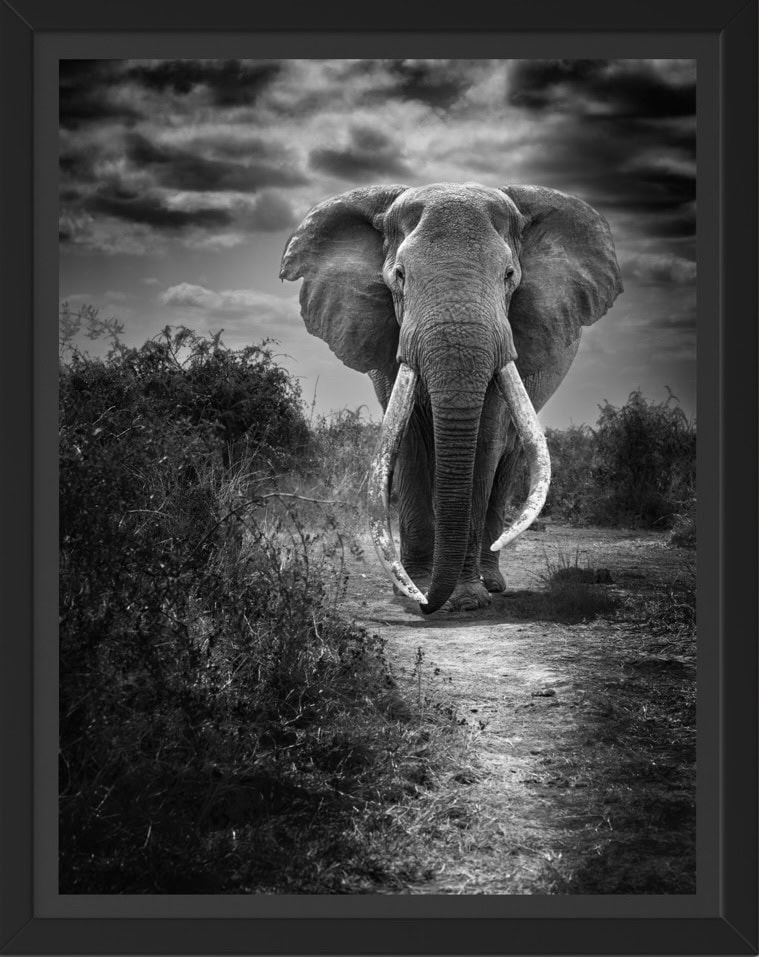
Collodion is a viscous solution that was historically used as a binder in both early photography and medical applications. In photographic practice, it is best known for its role in the wet plate process, a technique that rose to prominence in the mid 19th century.
The wet plate collodion process involves coating a glass or metal plate with collodion containing dissolved iodide or bromide salts. The plate is then sensitised in a silver nitrate bath, forming light sensitive silver iodide or silver bromide on the surface. While the plate is still wet, it is exposed in a large-format camera and developed immediately, making the process both technically demanding and time critical.
From her initial encounter with the collodion technique, Griet recognised its unique material presence and expressive capacity. Drawn to the medium’s inherent unpredictability, she committed to an intensive investigation of its possibilities, positioning the process as a central element of the work.
Through a programme of rigorous experimentation, Griet began to integrate scale within the collodion process. Working incrementally from a 25 x 25 cm plate to 50 x 50 cm, she ultimately undertook the ambitious production of a 1 x 1 metre plate. Each shift in scale introduced significant technical challenges, demanding precision and adaptation. Her ability to navigate these constraints has been integral to the evolution of this truly unique work.
From 6 to 28 September 2021, animal photography was on display in the prestigious Guy Pieters gallery on the Knokke Le Zoute. The exhibition was exclusively devoted to collodion prints by Griet Van Malderen, animals and for the first time Ethiopian portraits.
Prints
THE CLASSIC PRINT
The retouching and printing of Griet Van Malderen’s photographs are carried out in Belgium by internationally renowned studios that work with leading photographers worldwide.
The digital prints are produced using EPSON printers on Hahnemühle Photo Rag Baryta 315gsm paper, ensuring exceptional longevity, up to 110 years when protected with anti-UV glass, while delivering the rich tonal depth and distinctive finish of traditional baryta paper.
THE PLATINUM PRINT
To further push the boundaries of her artistic practice and embrace new challenges, Griet has ventured into platinum printing. Recognising the importance of offering collectors truly unique and exceptional works, she sees this process as an opportunity to elevate her photography to a new level of artistry.
Platinum printing is a highly meticulous process. It involves coating paper with a light sensitive solution containing platinum and palladium salts, which is then exposed to a negative through contact printing or an enlarged negative. After exposure, the print passes through a series of carefully controlled chemical baths to develop and fix the image. The appeal of platinum prints lies in their exquisite detail and exceptional archival quality. The use of precious metals gives each image a luminous quality, with subtle gradations and a remarkable depth that captivates the viewer.
THE AWAGAMI PAPER
Printing on Awagami paper offers a distinctive experience, blending Japanese tradition with contemporary photographic practice. This handmade paper, crafted from natural fibres, is valued for its unique texture and durability.
When Griet’s photographs are printed on Awagami paper, they take on added depth and character, with a soft, subtle finish. The paper’s distinctive ink absorption produces gentle tonal transitions and a sense of volume, making it particularly suited to artistic works and limited editions.
This printing method is highly regarded in the world of fine art photography, where every detail matters. Its durability ensures the longevity of each piece, while delivering a refined and distinctive aesthetic.